15 Best AI Construction Bidding Software Tools in 2026
Bid Software Comparison

15 Best AI Construction Bidding Software Tools in 2026

15 best AI construction bidding software platforms for 2026 - covering bid tracking, proposal creation, subcontractor bid management, Go/No-Go scoring, compliance matrices, and risk detection for GCs, EPCs, and engineering teams in the USA.

Author: ContraVault AI Team
January 29, 2026
21 min read

Responding to construction RFPs has never been tougher in the U.S. market. Today's contractors juggle dozens of procurement portals, tighter deadlines, and thinner margins where even one missed clause or compliance requirement can disqualify a bid entirely. Many teams burn out chasing low-fit opportunities, overextending estimators, or scrambling at the last minute to meet submission rules. That's where modern construction bidding platforms and AI-powered bid construction software are changing the game. As teams evaluate options, they often consider bidding automation and the latest construction ai tools; some even search for terms like management software ai or construction softwarebid while comparing platforms.

The right stack combining intelligent job bidding software with automated proposal workflows helps teams qualify opportunities faster, surface hidden risks, extract requirements accurately, and produce compliant submissions without manual chaos. Instead of reactive bidding, firms can move toward structured, data-driven decisions across their entire bid and proposal management software workflow.

In this guide, we compare 15 leading AI construction bidding tools for 2026, evaluated across workflow management, opportunity qualification, proposal creation, subcontractor coordination, and compliance analysis. It's built specifically for U.S.-based general contractors, subcontractors, EPC firms, estimators, proposal managers, and BD/capture teams looking for the best construction bid management software to win more while working smarter.

Construction Bid Management

How Can AI Softwares Enhance the Bidding Process?

Modern AI tools are reshaping how construction teams pursue work. Instead of juggling spreadsheets, emails, and folders, today's construction bidding platform brings everything into one place from opportunity tracking to proposal delivery. These construction tools streamline construction project bidding by reducing manual effort and helping teams focus on the right pursuits.

At the foundation is bid construction software that gives clear visibility into your pipeline. A good system shows every active pursuit on one screen, with owners, deadlines, and next steps. Platforms like PreconBid centralize bid invites and auto-populate calendars, so nothing slips through the cracks. AI-driven dashboards also provide win/loss insights, helping teams learn which clients, regions, or project types perform best.

Proposal creation is another major upgrade. With built-in templates, collaboration, and version control, bid and proposal management software allows multiple stakeholders to work on the same draft without breaking formatting.

Where AI really stands out is competitive decision-making. Advanced systems now offer Go/No-Go scoring, automatic risk detection, compliance checklists, and even RFI drafting. For example, AI can also analyze full RFPs to generate Go/No-Go scores with clause-level evidence, flags hidden risks, and builds compliance matrices directly from the source documents.

For U.S. contractors, especially teams evaluating bidding software for general contractors, this shift to AI-powered construction bidding platforms means fewer low-fit pursuits, faster proposal cycles, and stronger compliance.

Top 15 AI Construction Bidding Software in 2026
Procore

1. Procore

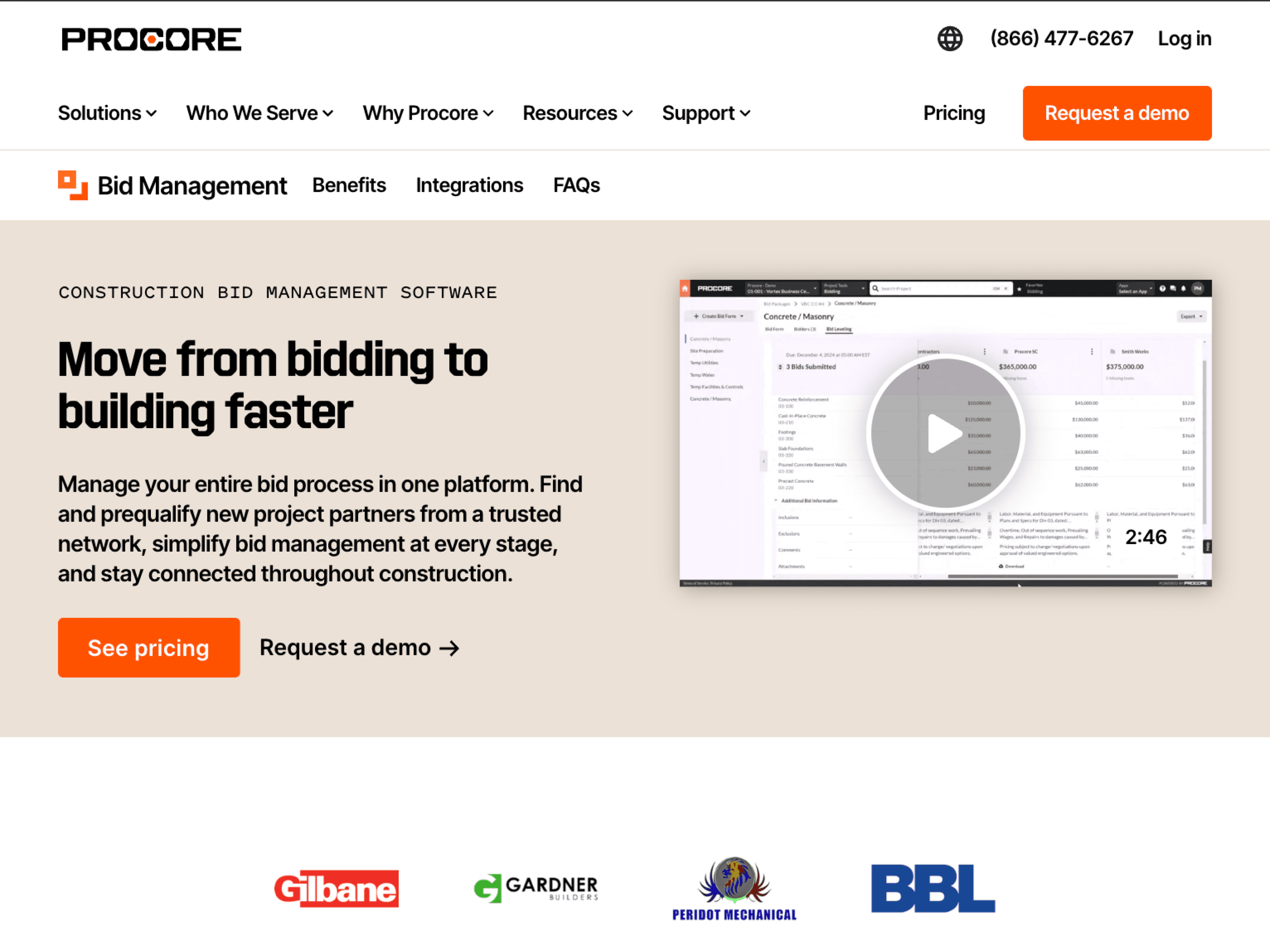
Procore is a powerhouse in construction bid management and project workflow software. Its bidding module integrates seamlessly with Procore's project management and financial tools, allowing general contractors to autopopulate bid invitations with plans/specs and send them out at scale.

The platform tracks who views and submits bids, and once a bid is awarded, Procore can instantly convert the winning bid into a subcontract or purchase order automatically updating the project budget and contract values. Procore also offers an open API and built-in integrations (e.g. DocuSign) so teams can e-sign contracts and sync data with accounting systems, creating an end-to-end construction management solution.

Procore's breadth is unparalleled for large contractors beyond bidding, it covers field management, scheduling, cost control, and more, making it a "one-stop" construction platform.

2. Buildertrend

Buildertrend combines bid management, estimating, and project management in one intuitive interface tailored for home builders and remodelers. Users often credit Buildertrend with helping them "win more jobs" by speeding up bid turnaround. In practice, Buildertrend lets you organize all your project bids in a single dashboard and broadcast bid packages to multiple subcontractors at once. You can set automated bid deadlines and email reminders, sync incoming bid prices directly with your estimate, and ensure subs have the latest plans and specs through the built-in plan room. For client proposals, Buildertrend provides customizable templates and even supports digital signatures to finalize agreements quickly.

The all-in-one design streamlines the pre-construction process for small contractors from leads to estimates to signed contract reducing the need to juggle multiple apps. Its ease of use and automation of notifications (like reminding subs of due dates) help contractors respond faster and appear more professional.

3. Archdesk

Archdesk is a cloud-based construction management platform specialized in supporting end-to-end workflows from bidding to project delivery. It offers an integrated suite of tools to manage bids, perform digital takeoffs, handle project scheduling, and even control finances and procurement. All data is updated in real-time across the platform, so estimators and project managers are always on the same page with the latest costs and documents. Archdesk's bidding module lets you create professional proposals, manage cost estimates, and track bid statuses efficiently, all within one system. Teams can collaborate from any device connecting field and office which speeds up communication and decision-making.

Archdesk provides a single source of truth for your construction data. Bids, budgets, and schedules are linked, enabling data-driven decisions and eliminating duplicate data entry. The software also offers custom report templates and dashboards, giving managers complete visibility into bidding pipelines and project financials.

ContraVault AI

4. ContraVault AI

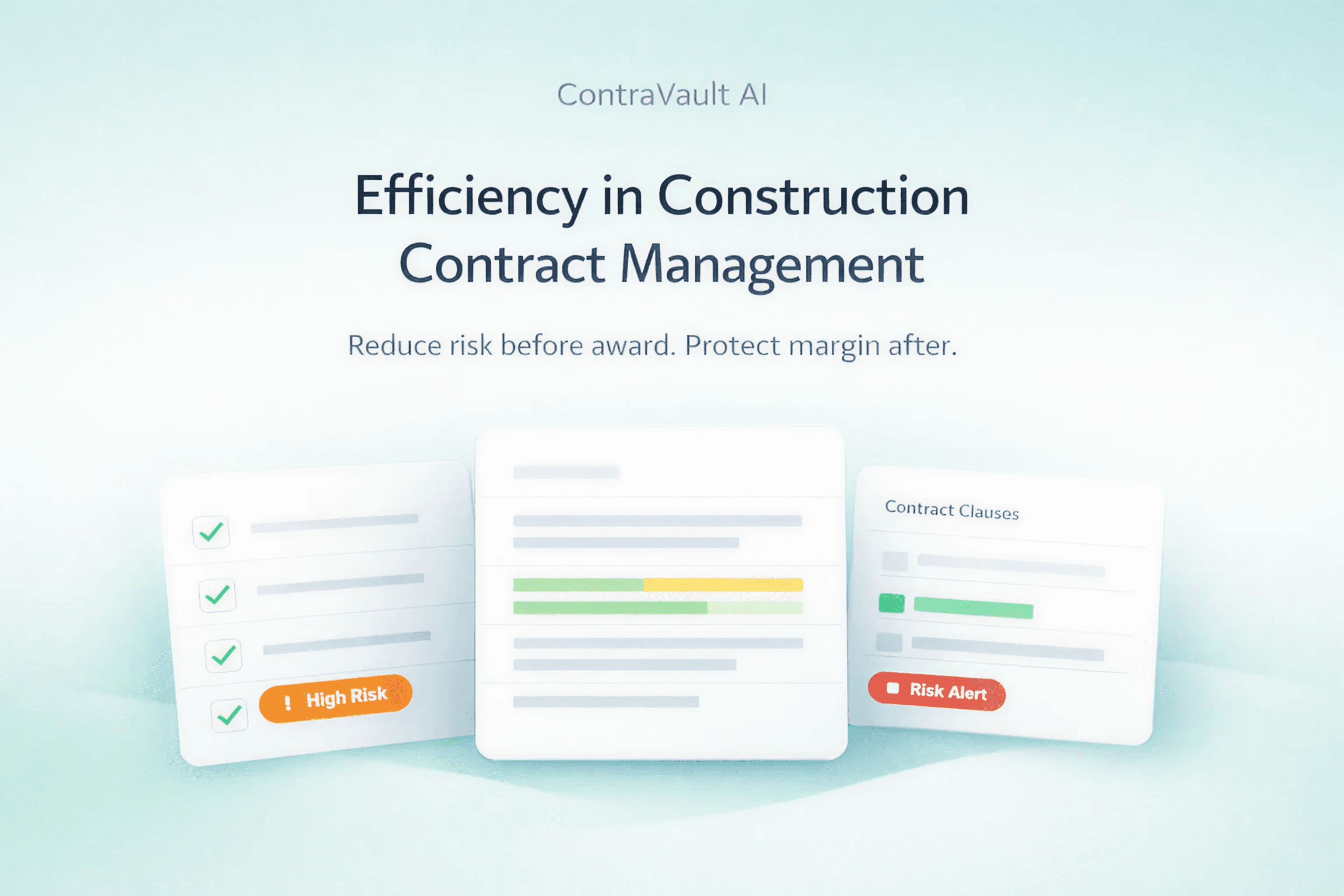
ContraVault AI isn't just another tool for parsing RFPs it's an end-to-end AI-powered construction bidding platform built to handle the full pre-award workflow. It helps teams go from "Should we bid?" all the way to a submission-ready proposal without the usual maze of spreadsheets and scattered documents.

  • Qualify the Opportunity (fast, defensible Go/No-Go): Upload the entire bid package (RFP, specs, drawings) and ContraVault instantly produces a Go/No-Go score based on your own criteria. It backs up the score with evidence by extracting relevant requirements and past project data. The AI surfaces any gaps against experience requirements and flags disqualifiers, giving leadership a clear, quick view of whether a project is worth pursuing.
  • Flag Risks Before They Bite: The software automatically detects and tags contractual and commercial risks hidden in the documents things like onerous payment terms, liquidated damages, unfavorable warranty clauses, strict schedule penalties, or high insurance/bonding thresholds. Every risk finding is linked to the exact RFP clause, so your legal/risk team can verify details in one click. This proactive risk identification means no more "surprise" clauses after you've invested weeks in a bid.
  • Build Bulletproof Compliance: ContraVault AI generates a detailed compliance matrix from the RFP. It lists every mandatory requirement forms to fill, certifications to attach, specific narratives or schedules to include each tied to its source in the RFP. The team can assign owners and due dates for each item, tracking compliance in real time to avoid last-minute omissions. In short, it acts as an automated compliance checklist you can trust.
  • Draft the Proposal Faster: With requirements extracted and organized, ContraVault helps draft the proposal by providing a structured template aligned to the RFP's sections and evaluation criteria. Instead of starting from a blank page, you begin with a clean, pre-populated proposal outline complete with boilerplate text tailored to the RFP's language and the specific project. The AI ensures the draft is formatted to the buyer's guidelines and that each response section maps to what the client is asking for (no more missing pieces or off-topic answers). Your subject matter experts can then focus on refining content rather than wrangling formatting or copy-pasting requirements.
  • Streamline RFIs and Clarifications: If parts of the RFP are unclear or contain conflicts, ContraVault can even draft clarification questions (RFIs) in context. It pulls the exact clause text and suggests a polite, precise question to ask the client. This helps your team eliminate ambiguities early, so you don't over- or under-commit in your bid due to guesswork.

5. PlanHub

PlanHub is essentially a massive online bid marketplace and plan room rolled into one. Branded as an "all-in-one preconstruction bidding platform," it connects thousands of general contractors with subcontractors and suppliers looking for projects. GCs and project owners can upload project plans and specs into a PlanHub plan room, then invite subs to bid or simply publish the project for any qualified subs in the network to see. Subcontractors using PlanHub can browse a feed of bidding opportunities filtered by location, project type, or trade, tapping into a network of over 32,000 GCs posting projects. PlanHub provides basic bid management features: you can share documents, track which subs have viewed or downloaded the files, answer bidder questions, and see who has submitted a bid.

PlanHub excels at bid discovery and subcontractor outreach. It essentially gives subs one place to find a lot of available work without scouring dozens of public plan sites. For GCs, it's a quick way to get exposure to a broad subcontractor market and manage bid documents without setting up your own IT infrastructure. The platform's messaging and notifications (e.g. deadline reminders) help keep everyone coordinated.

CoConstruct

6. CoConstruct

CoConstruct is a popular construction project management software for custom home builders that also includes built-in bidding features. Within CoConstruct, you can create a digital plan room for each project and send out standardized bid requests to your network of subcontractors. Subs can submit their quotes through the CoConstruct portal, and when bids come back, you're able to compare them side-by-side and award the contract to the best bid. Uniquely, CoConstruct lets you push the details of the winning bid straight back into your project estimate or budget with one click. This tight integration between estimating and bidding helps ensure that your final estimate and purchase orders reflect the actual subcontractor costs, avoiding errors from manual re-entry.

Designed specifically for small builders, CoConstruct's bidding tool simplifies coordination with your trade partners. All communications, files, and updates stay organized under each project, and subs appreciate the standardized bid sheet (which makes it clear what scope to price). For a residential builder juggling dozens of trades on a custom home, CoConstruct keeps the process organized in one place from bids to client selections to change orders which improves efficiency and client transparency.

7. STACK

STACK is a cloud-based takeoff and estimating software that has become a go-to for contractors seeking speed and accuracy in bid prep. It enables estimators to upload full plan sets (PDF drawings), perform quick digital takeoffs (measuring lengths, areas, counts on-screen), and generate material and labor quantities rapidly. STACK comes with integrated libraries of items and assemblies, along with regional cost data, so users can build complete estimates without starting from scratch. Many teams use STACK to evaluate new bid opportunities by quickly calculating key quantities and costs, which in turn helps decide bid/no-bid and provides data for pricing. Customers report that this efficiency in takeoffs leads to more bids completed and higher win rates. In fact, STACK's AI-assisted tools facilitate very fast and accurate plan analysis and real-time collaboration, removing a lot of manual effort from the estimating process.

For quantity takeoffs and cost estimating, STACK is one of the most robust cloud platforms. It's accessible from anywhere and allows multiple team members to collaborate on an estimate together. The ability to overlay and compare drawing revisions is also handy during a bidding cycle when addenda roll in. By automating calculations and providing a cost database, it helps improve estimating accuracy and consistency across your bids.

Estimate-Rocket

8. Clear Estimates

Clear Estimates is an estimating and proposal generation tool laser-focused on speed and simplicity for small contractors. It comes pre-loaded with a database of over 12,000 parts (each with localized material and labor costs by zip code) and hundreds of project templates, covering common jobs like kitchen remodels, roofing, painting, etc. This means a contractor can literally select a template (or a few relevant line items), adjust quantities, and produce a detailed cost estimate in minutes. The software then takes that estimate and automatically generates a polished, branded proposal document complete with your logo and even pre-written contract language for the scope of work. The end result is you look professional and thorough without having to write lengthy proposals from scratch for every bid.

Clear Estimates significantly reduces the learning curve and startup time for estimating. It's optimized for residential and light commercial jobs where speed is crucial for example, a home remodeler doing dozens of kitchen and bath quotes a month. The built-in cost database is maintained with current pricing, which helps users stay competitive and avoid underbidding due to outdated prices. The auto-generated proposals also ensure consistency and include legal verbiage that a small contractor might otherwise forget to include.

9. BidClerk

BidClerk (part of ConstructConnect) is primarily a construction lead generation service and database. It provides subscribers access to a vast database of upcoming commercial projects and public bids, often including project details, plans and specs, key contacts, and bidder lists. Contractors use BidClerk to discover new opportunities in their region it's like an online catalog of projects out for bid. In fact, BidClerk boasts over a million active projects across various sectors in its database, making it a powerful tool to fill your pipeline. You can search projects by location, type, stage, and more. When you find a project of interest, BidClerk lets you view documents (sometimes right on the platform) and see information like bid deadlines and who else is bidding.

For business development and market visibility, BidClerk is a treasure trove. It saves the time of scouring dozens of newspapers, agency websites, or builders exchanges for leads instead aggregating them in one place with search and filtering tools. It's especially useful for subcontractors and suppliers looking to find out what GCs are bidding (and to get their foot in the door on those projects). The data often includes both private and public projects, expanding your view of available work.

10. iSqFt

iSqFt is another well-known platform (also under ConstructConnect) that serves as a bid communication network, especially between general contractors and subcontractors. Many GCs use iSqFt to invite subcontractors to bid on their projects: they upload project plans, select subs from a database or their own contacts, and send out ITBs via the system. Subcontractors on iSqFt can access a dashboard of invitations, download plans, and submit their quotes. One of iSqFt's strengths is its network effects with thousands of subcontractors and GCs onboard, it's a central hub where a lot of bid activity happens. In fact, it's marketed as part of the largest private construction network, integrated with ConstructConnect's project lead database and takeoff tools.

For GCs, iSqFt simplifies bid distribution and subcontractor management. You can manage all your subs' contact info, prequalification data, and bidding status in one place. The platform notifies subs of updates (addenda, Q\&A) so you ensure everyone's working off the latest information. For subs, it's convenient to have all their invitations from various GCs in one interface, rather than juggling emails and FTP links from different sources. iSqFt also ties into takeoff and estimating (through ConstructConnect's suite), so there's a path to measure plans and estimate within the ecosystem.

11. Estimate Rocket

Estimate Rocket is an all-in-one CRM, estimating, and project management platform built primarily for service contractors (think painters, HVAC companies, landscapers, etc.) to run their jobs from initial lead to final invoice. On the bidding side, Estimate Rocket helps users create fast, accurate estimates using trade-specific templates and item libraries. For example, a painting contractor can use pre-built assemblies (like "paint a 12x12 room") and just adjust quantities, rather than building each estimate from scratch. The software then instantly generates professional proposals from those estimates, which can be emailed to clients for approval. It even supports e-signatures and deposits, then later converts the accepted estimate into work orders, schedules, and invoices hence the "rocket" from lead to paid.

Simplicity and integration are big pluses. Small contractors often struggle with using one app for estimates, another for scheduling, another for invoices Estimate Rocket puts it all together. The interface is modern and geared toward quick turnaround: you can produce a polished quote in minutes and automate follow-ups to clients, which helps increase your win rate. It's also highly rated for its CRM capabilities like tracking customer info, past jobs, and communications in one place. This ensures no bid or lead falls through the cracks.

12. Autodesk BuildingConnected

BuildingConnected (now part of Autodesk Construction Cloud) is an enterprise-grade bid management platform widely used by large general contractors and owners. It essentially serves as a centralized hub to manage all incoming and outgoing bids. For GCs, BuildingConnected's Bid Manager allows you to send ITBs to subcontractors, track their responses, and compare bids in a structured way. It also features Bid Board Pro for subcontractors a dashboard where subs can manage all the bids they're pursuing (not just with one GC, but across all invites). One standout feature is the prequalification module: GCs can use BuildingConnected to collect and review subs' qualifications (safety records, financials, certifications) before awarding contracts. Integration with Autodesk Docs means plans and models are easily accessible and kept up-to-date for all bidders.

BuildingConnected shines for companies dealing with high bid volume and complex projects. It can handle hundreds of invites concurrently and is built to avoid the chaos of email-based bidding by providing a clear audit trail of who was invited, who's interested, and who submitted. The platform's analytics help measure things like subcontractor responsiveness and bid coverage (so you know if you have enough bids on each trade). Because it's part of Autodesk, it ties in nicely with other construction tools like Revit (for model-based quantity takeoff) and PlanGrid/BIM360. Enterprise contractors also appreciate the robust permission controls and the ability to maintain a private database of preferred subs alongside searching the broader network for new bidders.

13. SmartBid

SmartBid (a product now under ConstructConnect) is a construction bid management software historically popular with general contractors, known for its strengths in subcontractor prequalification and compliance management. It streamlines the entire invitation process: GCs can manage their subcontractor database, send out ITBs, and receive bids all through SmartBid's portal. One of its differentiators is how it handles subcontractor data tracking insurance certificates, bonding capacity, safety stats, minority certifications, etc., so that GCs can ensure a sub meets the project requirements before awarding them work. SmartBid also offers integration hooks to estimating tools (like Sage or ProEst) and other project management systems, to create a more connected preconstruction workflow.

For contractors in highly regulated or document-intensive environments (think public works or industrial projects), SmartBid is a lifesaver for keeping all the paperwork in order. It automates reminders for expiring insurance, can require subs to fill out a pre-bid questionnaire, and generally reduces the administrative overhead on GCs to qualify subs. The bid solicitation process itself is well-established; since many subs are familiar with iSqFt/ConstructConnect, using SmartBid taps into that same network of companies. It also has robust reporting so you can analyze your bid coverage, response rates, and M/WBE participation easily.

14. VisibleThread

VisibleThread is an AI-powered proposal and contract analysis platform focused on clarity, compliance, and risk reduction in RFP responses. Unlike some tools that help generate proposal content, VisibleThread concentrates on improving the quality and defensibility of what you submit. For RFPs, VisibleThread analyzes both the solicitation documents and your draft responses to identify problematic language things like ambiguous requirements, vague or inconsistent wording, passive voice, or missing compliance keywords that might raise red flags with evaluators. It's essentially a smart proofreader and compliance checker combined. The software's natural language processing models will flag sections of your proposal that don't clearly tie back to an RFP requirement or that leave too much room for interpretation. It also helps build a requirement traceability matrix by ensuring every must-have item in the RFP is addressed in your proposal, highlighting any gaps so you can fix them before submission.

In practice, VisibleThread acts like a quality-control and risk lens. Teams use it to run a "red team" review on proposals automatically spotting if you answered all the RFP sections, used the customer's terminology consistently, and wrote commitments that are clear and enforceable. It can greatly reduce the edit cycles needed to get a proposal client-ready. The platform is especially valued in industries like defense, engineering, or other high-stakes procurements where a single sloppy phrase or missing requirement can get your bid tossed out. By ensuring clarity and full compliance, VisibleThread helps teams submit proposals that are not only convincing to evaluators, but also less likely to cause disputes or misunderstandings later.

The focus on language clarity and compliance fills a crucial gap in the proposal process. VisibleThread brings objectivity instead of relying solely on human reviewers (who might overlook something), it provides an automated second pair of eyes. This is great for large proposal teams where maintaining a consistent tone across sections written by different authors is challenging. It's also very useful for non-writers (subject matter experts) who contribute to proposals; VisibleThread will flag overly complex sentences or jargon, helping improve readability for the client.

15. Togal AI

Togal AI is a cutting-edge tool that applies artificial intelligence to one of the most time-consuming parts of bidding: construction plan takeoffs. Instead of manually clicking and dragging on drawings to measure quantities, Togal AI's algorithms automatically scan and identify drawings' elements (like walls, windows, floors, concrete areas, etc.) to produce fast, accurate quantity estimates. In other words, you upload a set of plans and Togal's machine learning will detect the different materials and scopes, measure them, and output the quantities dramatically reducing the hours estimators spend on takeoffs. It also provides instant reporting, highlighting the identified elements and measurements, which you can then adjust or validate as needed. By integrating with common estimating software, those quantities can flow into your cost estimates seamlessly.

Togal AI can save huge amounts of time on the front end of bidding. For large projects with hundreds of pages of drawings, what might take an estimating team several days of tedious work could be done in minutes, giving them more time to focus on pricing strategy and value engineering. It's also very consistent AI won't accidentally skip a sheet or miscalculate due to fatigue. Early adopters have reported being able to bid more projects or spend more time on important tasks now that the takeoff bottleneck is eased. Togal's specificity (focusing just on plan analysis) means it's been trained deeply on construction drawings, and it keeps improving as it processes more plans.

Conclusion: How to Select the Right Bidding Software

Choosing the best construction bid management software isn't about chasing the biggest brand it's about solving your biggest bottleneck. Start with three questions:

  1. Do you need more opportunities, or better qualification?
  2. How many bids do you run per month, and how document-heavy are they?
  3. Who needs access just estimators, or also legal \+ leadership for approvals?

Use that to match the right category of construction bidding platform to your workflow:

  • If your bottleneck is finding work and managing invites: lean toward bid networks like PlanHub, iSqFt, and BidClerk to expand pipeline and subcontractor coverage (especially useful as subcontractor bid management software for outreach).
  • If your bottleneck is estimating \+ proposal speed: prioritize takeoff \+ template-driven tools like STACK, Buildertrend, and Clear Estimates to turn specs into pricing faster strong ROI for teams that need bid proposal software and quick turnaround.
  • If your bottleneck is coordination and deadline control: choose platforms with strong dashboards, calendars, collaboration, and approvals like Procore, CoConstruct, and Buildertrend the kind of bid and proposal management software that keeps pursuits moving without things slipping.
  • If your bottleneck is coordination \+ deadline control, ContraVault AI goes a level deeper than traditional dashboards. Instead of only showing dates and tasks, it turns the RFP itself into a structured, trackable workflow so your team isn't just "on time," they're submission-ready and compliant.

ContraVault AI automatically pulls key deadlines and submission requirements from the bid package, converts them into an actionable checklist, and assigns ownership across estimators, proposal teams, legal, and leadership. Every item is tied back to the exact clause or page, so there's no ambiguity about what needs to be done. This is the difference between basic task tracking and true bid and proposal management software built for high-stakes bids.

It also keeps pursuits moving with built-in approvals and audit trails: who reviewed what, what risks were accepted, what clarifications were raised, and what changed after addenda. For U.S. teams handling complex bid packs, this becomes a real advantage: fewer last-minute scrambles, fewer missed "mandatory" attachments, and cleaner internal alignment.

In short: if Procore and Buildertrend help you manage a pipeline, ContraVault helps you control the bid outcome as an AI-first construction bidding platform that reduces chaos, de-risks deadlines, and ensures nothing critical slips through.

Tags:#construction-bidding-platform#bid-construction-software#best-construction-bid-management-software#bid-and-proposal-management-software#subcontractor-bid-management-software#bidding-software-for-general-contractors#contractors-bidding-software#bid-proposal-software#bid-writing-software#go-no-go-analysis#compliance-matrix#risk-detection#rfp-automation#preconstruction#aec-bidding#usa-construction

Sign Up for more like this

By submitting this form, you agree to our Privacy Policy and consent to receiving updates from ContraVault.

Ready to take your bidding to the next level?

Discover how AI can streamline RFP document analysis, uncover non-standard clauses & boost success rates.

Turn complexity into clarity

One place to review, search, and draft—so you don't lose days in PDFs, email threads, and contradictory notes.

Request Demo
15 Best AI Construction Bidding Software Tools in 2026 | ContraVault AI