Competitive Bidding on Indian Tenders: How to Decode Rivals on GeM, CPPP, and State e‑Proc
Government tendering in India is no longer guesswork. Learn how to track competitor strategies on GeM, CPPP, and state portals—and how to uncover who’s winning, losing, and at what price.

Competitive Bidding on Indian Tenders: How to Decode Rivals on GeM, CPPP, and State e‑Proc
India’s public procurement market is vast and dynamic. Government e-Marketplace (GeM) alone has facilitated over 3 crore orders worth ₹14.81 lakh crore since its launch (₹5.42 lakh crore in FY2024). GeM now spans all 36 states/UTs, with 1.6 lakh+ government buyers and 22 lakh+ sellers registered. This digital surge means that EPC contractors and AEC firms face hundreds of thousands of “gem portal tenders” and state/central e-procurements each year. Under rising MNRE guidelines and CVC mandates for transparency, agencies use structured “competitive bidding” rules mnre.gov.in. In this fast-paced environment, plain luck or lowest price no longer guarantees success. Instead, tracking how rivals bid \- their pricing, quantities, timelines, and even marketing tactics \- is key to smart bidding. By decoding competitor bids across GeM, the CPPP (Central Public Procurement Portal) and state e‑procurement sites, Indian contractors can sharpen their own bids and win more work.
Shifting Trends in Competitive Bidding
Digital adoption is reshaping government tenders. GeM’s rapid expansion (now a “primary tool for public procurement”) means even complex items and services go online. Major projects also use the CPPP and dozens of state portals (e.g. eProcurement systems of Maharashtra, Gujarat, Kerala, etc.). The bidding process itself is evolving: reverse-auctions on GeM, two-envelope tenders for works, and strict low-price (L1) awards are common. Rules increasingly favour tech-driven analysis: GeM has integrated AI search to give faster insights to buyers and sellers. MNRE guidelines for renewables explicitly require “transparent and fair” tariff bidding mnre.gov.in. This digital push means more bids are searchable (tender notices, corrigenda, award results) and more data is recorded. New policy shifts \- like the upcoming GeM global tenders feature or mandatory Make-in-India preferences \- only broaden the playing field financialexpress.comfinancialexpress.com. Meanwhile, more suppliers (MSEs, startups, women-led firms) are entering the fray pib.gov.in. The result is fiercer competition: some state markets see dozens of bidders on big projects. In this climate, understanding industry trends (e.g. peak tender season in March 2025 for fiscal-year budgets) and mastering the online bidding ecosystem are crucial for any bidder.

Why Competitor Bid Analysis Matters
In a highly competitive tender, simply undercutting the lowest bid often backfires (quality, risk of re-tender). Instead, top contractors analyze rival behavior to inform strategy. Competitor analysis helps you:
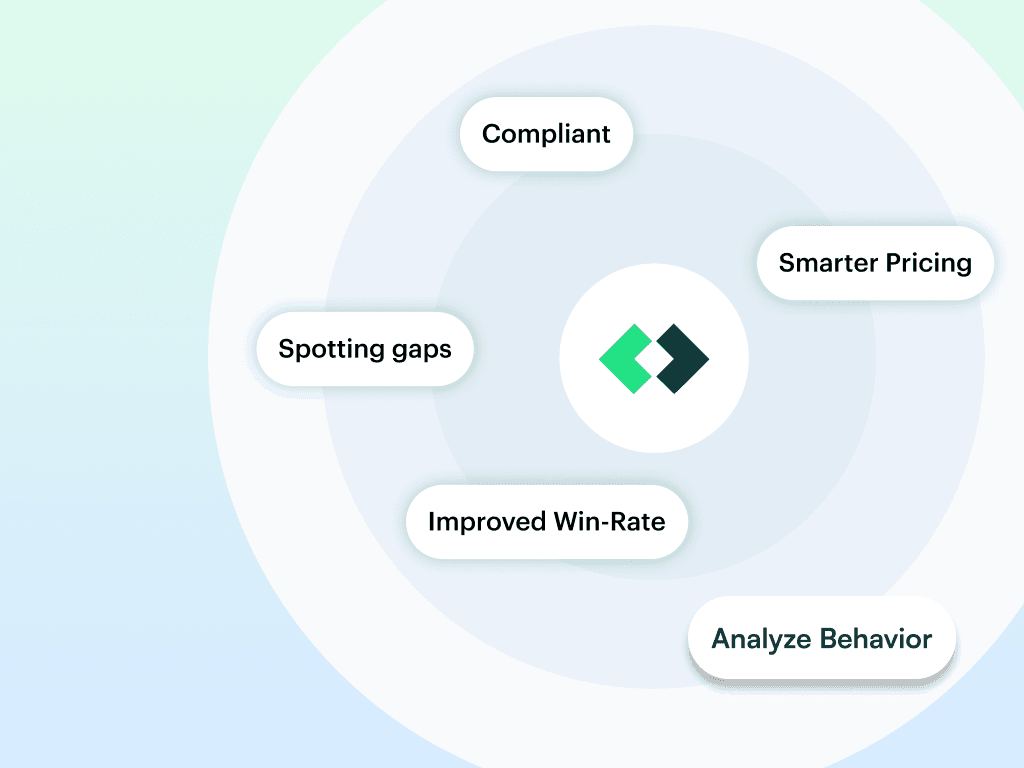
- Price smarter: Know if competitors typically bid 10-15% above last winning prices. A data-driven bid can edge out rivals without needless undercutting.
- Spot gaps: If one firm dominates coastal projects, maybe inland bids have less rivalry. Or if a rival always bids on small-value orders, they may ignore large contracts.
- Improve win-rate: By observing which companies win similar tenders, a bidder can benchmark its own success. (For instance, one contractor saw its win-rate jump from \~8% to \~25% after tracking rivals’ bids systematically.)
- Stay compliant: CVC/MNRE rules favor open competition. Tracking competitors ensures your bids meet technical specs and cost norms, avoiding disqualification. For example, MNRE’s renewable-energy bidding guidelines stress uniform procedures \- so knowing how others satisfy those rules is helpful.
In short, competitor insights turn guesswork into strategy. They reveal what combinations of technology, delivery schedule, and pricing have succeeded, enabling more confident bidding. Without this context, teams may waste effort on the wrong projects or underbid to a loss.

How to Decode Rival Bids (with data)
Gather public tender data. The first step is mining all relevant portals. On GeM, use the “Bid/ AOC Status” and Ongoing Bids search to monitor tenders (including past due dates and auction results). On the CPPP (eprocure.gov.in), use “Active Tenders” and “Bid Awards” to find current projects and awarded contracts. State e-procurement sites (e.g. Maharasthra’s MahaTender, Kerala eproc, etc.) similarly list live tenders and results. For each tender of interest, note bid details: item list, required specs, deadline, etc.
Next, track specific companies. Many portals allow searching by company name or supplier class. For example, GeM’s seller dashboard lets you see tenders where a given supplier has bid. Third-party tools (or manual Google searches) can find press releases or bulletins naming L1 bidders. Cross-reference CPPP’s Bid Awards to see if a rival won a contract. In some states, Bid Opening summaries list participating firms (note: not all do). Even the number of bidders per tender (often visible on GeM/CPPP status pages) is useful data. By compiling such data in a spreadsheet or analytics tool, you build a picture of each competitor’s volume and focus.
Structured tracking is powerful. One firm found its win rate leap after systematic analysis of rivals: before vs. after competitive tracking (e.g. win-rate jumping from \~8% to 25% following organized monitoring). In practice, this might mean logging every tender a rival bid on and the outcomes. Over time you’ll see patterns (e.g. Rival A never bids below ₹10 crore; Rival B wins mostly in urban areas). Use such trends to decide which tenders to pursue or avoid.
Leverage data and guidelines. When evaluating bids, use sector-specific metrics. For instance, MNRE’s solar/wind bids often include an L1 discovery phase; tracking historical L1 tariffs (some published in MNRE or SECI releases) can guide your pricing. Use “gem bid status” meaningfully: the status codes (Active, Awarded, Terminated) on GeM help you gauge a tender’s progress. Combining this with CPPP’s “Tender Status” (Concluded, Cancelled) provides context. Where possible, collect actual bid values \- e.g. some states publish accepted rates under RTI or in public dashboards. Feeding these numbers into a simple model (e.g. average margin, bid volatility) quantifies how aggressive each competitor is.
Compare bids for similar projects. Look for past tenders similar in scope/size to the one you want. Analyze the winning bid (if available) or the bid values of the top 2-3. For example, a 2024 railway works tender might list the L1 cost and if you tracked that, you’d know if a rival bid 5% under standard rates. Also note quality or technical differences: sometimes bidders sacrifice scope to win on price. Reading competitors’ tender clarifications or published scope of work documents can reveal what concessions they make. All this contextual data helps you calibrate your own bid: you might choose a slightly higher quality approach if others are under-delivering, or adjust price if competitors are consistently low-ball.
By systematically gathering and analyzing this data across GeM, CPPP and state e‑proc sites, your team can decode rival bids in real time. You’ll know who’s bidding on what, how many bidders participate, and what pricing range wins. Those insights turn into tactical advantages in every bid.
Best Practices for Competitive Bidding
- Use formal tools and tracking. Maintain a shared database (even a simple spreadsheet) of tenders, competitor names, and outcomes. Set up Google Alerts or portal notifications for new tenders in your domain. Consider procurement-intelligence platforms (see \[How It Works\]) that can automate this gathering.
- Focus on key rivals. Identify 3-5 main competitors in each segment (e.g. “highway bridges” or “solar EPC”). Track them closely rather than chasing every random bidder. Check their past projects on GeM/CPPP to spot strengths and weaknesses.
- Time your bids. Competitive analysis can reveal when rivals typically bid. For instance, if leading firms pause bidding during monsoon months, that’s your chance to win easier contracts. Monitor tender release calendars (many sites allow tender-by-close-date queries) to anticipate openings.
- Benchmark pricing. Never guess “market rate.” Use historical tender data to set a baseline. For example, if similar work won at ₹4.5 crore last year, bidding ₹6 crore without justification is risky. Track indices (material/cement prices) and include them in your model. Tools can calculate the ideal range using average of past L1 bids.
- Document losses and lessons. When a bid is lost, do a post-mortem. Some authorities publish “tender awarding rationale” (e.g. lowest evaluated price). Record the loss and any feedback. Adjust future bids accordingly \- maybe add value in technical approach or negotiate better supply contracts.
- Stay legal and ethical. Using public data and following portal rules is legal \- in fact CVC expects open intelligence gathering. Never engage in collusion or bid rigging. If a rival’s name appears mysteriously (e.g. always bids then “forfeits” deposit), that’s intel too. Above all, use data for smarter bids, not for unfair tactics.
Beyond these, leverage technology: many firms now use analytics dashboards or CRM-like tools for tenders, and even join peer groups (\[Community\]) to share insights. A subtle “CTA” is that the right software can automate competitor tracking (see \[Support\] or our guide). By institutionalizing this process \- not just ad-hoc checking \- contractors see real metric uplifts (as noted above). Tracking competitors may add a little cost, but it pays off with higher win-rates and better margins.
FAQ: Common Doubts on Competitor Tracking
How AI Tools Can Supercharge Competitor Analysis
AI is quietly transforming how contractors track and interpret competitive bidding-especially across high-volume portals like GeM, CPPP, and state e‑proc. What once took dozens of hours with Excel and bookmarked links is now automated, structured, and even predictive.
Here’s how AI can elevate your bid strategy:
- Auto-Tracking Rivals Across Portals
AI systems can scrape and normalize tender participation data-detecting which companies bid, won, or skipped tenders across thousands of entries. Instead of manually checking each tender, teams get dashboards showing which rival is active in which sectors.
- Price Corridor Analysis and Benchmarking
Using historical award data, AI can build “price corridors” for similar tenders, showing typical L1-L2 spreads, average margins, and risky underbids. This helps bidders avoid overpricing or racing to the bottom. Some platforms even flag tenders where a specific rival usually wins below market rate.
- Tender Clustering and Opportunity Gaps
Through NLP and clustering, AI can group tenders by scope, location, or buyer preferences-revealing areas where competition is low. For example, if 70% of solar EPC firms avoid Northeast tenders due to logistics, your firm may gain an edge by bidding smartly in that segment.
- Automated Risk Detection
AI can scan bid documents for disqualification triggers (e.g., unrealistic timelines, insufficient turnover requirements), helping you pre-filter tenders. This saves time and prevents wasted effort on unwinnable bids-especially when rivals are known to skip or lose such tenders.
- Competitor Behavior Modeling
Over time, AI learns patterns in a competitor’s bidding-how often they participate, what sectors they dominate, and when they avoid bids. This predictive edge can improve Go/No-Go decisions during busy seasons.
These use cases aren’t future wishlists-they’re already being applied by top-performing procurement teams across India. Whether through custom analytics or specialized platforms, AI’s value lies in reducing grunt work and surfacing strategic signals that manual tracking misses.
For high-volume bidders navigating multiple portals and rivals, AI becomes the difference between reactive chasing and proactive strategy.
---
Conclusion: The Future Belongs to the Informed
Competitor analysis is no longer optional-it’s the foundation of smart bidding in India's ₹30 lakh crore+ public procurement ecosystem. With GeM tenders growing 33% YoY and states accelerating digital procurement, guessing your way through bids is increasingly risky.
Firms that decode rivals systematically-tracking bid participation, pricing patterns, win rates, and strategic gaps-gain not just more wins, but better margins and fewer wasted bids. Platforms now exist to automate this effort using AI, but the mindset shift is what matters most.
Stay alert. Watch the portals. Let data-not instinct-guide your next bid.
And if you haven’t yet explored tools for competitor intelligence, now’s the time. You don’t just need better prices-you need better visibility into who you’re up against, and how to outmaneuver them.
Sign Up for more like this
By submitting this form, you agree to our Privacy Policy and consent to receiving updates from ContraVault.
Comments0