FIDIC Contract Meaning
A FIDIC contract is a standard form contract used for construction, engineering, and EPC projects, published by the International Federation of Consulting Engineers (FIDIC). In tendering and project delivery, the term “FIDIC contract” usually means the General Conditions issued by FIDIC, combined with Particular Conditions, Employer’s Requirements, technical specifications, schedules, and addenda issued by the Employer. Together, these documents define how the project will be priced, executed, administered, paid, changed, delayed, and disputed.
FIDIC contracts are popular because they provide an internationally familiar structure for risk allocation and contract administration. On complex projects where multiple parties and jurisdictions are involved, teams use FIDIC to reduce ambiguity and ensure there is a common reference point for clauses around time, payment, variations, and claims. For procurement teams, FIDIC helps standardize tender conditions. For bidders, it defines the commercial and contractual posture they must price and plan for.
Why FIDIC Contracts Matter in RFPs and Tenders
Most disputes and margin leakages do not start with a dramatic event. They start with missed notice timelines, unapproved scope changes, undocumented instructions, or a misunderstanding of who owns design responsibility. FIDIC contracts put formal processes around these issues so that entitlement and accountability are clearer. That makes them highly relevant at bid stage because they influence whether an opportunity is commercially viable, how much contingency is needed, and what level of contract management effort will be required after award.
In many tenders, Particular Conditions and addenda modify the standard text significantly. That is where risk often hides, including tighter notice requirements, higher liquidated damages, stricter payment conditions, and stronger termination rights. Treating FIDIC as “standard boilerplate” is a common mistake.
Common Types of FIDIC Contracts
Red Book
Generally used when the Employer provides the design and the Contractor constructs the works. This is common in traditional construction and civil infrastructure projects.
Yellow Book
Commonly used for plant and design build projects where the Contractor carries more design responsibility and must meet performance requirements.
Silver Book
Commonly used for EPC or turnkey delivery models where the Contractor assumes broader risk and the Employer expects higher certainty on price and time.
FIDIC Contract Checklist for Bid Teams
Use this checklist when reviewing a FIDIC-based tender or EPC contract:
- Risk allocation: liability caps, indemnities, liquidated damages, and termination triggers
- Payment mechanics: certification timeline, retention, advance payment conditions, and supporting documents required
- Variations and change control: who can issue instructions, how valuation works, and what approvals are mandatory
- Time and delay: programme obligations, update cadence, extension of time pathway, and mitigation duties
- Notices and claims: timelines, format requirements, and evidence standards
- Particular Conditions and addenda: any clause that shifts risk or tightens procedures compared to the General Conditions
- Dispute process: escalation steps and the practical cost and time impact of each stage
How ContraVault Helps with FIDIC Contract Review
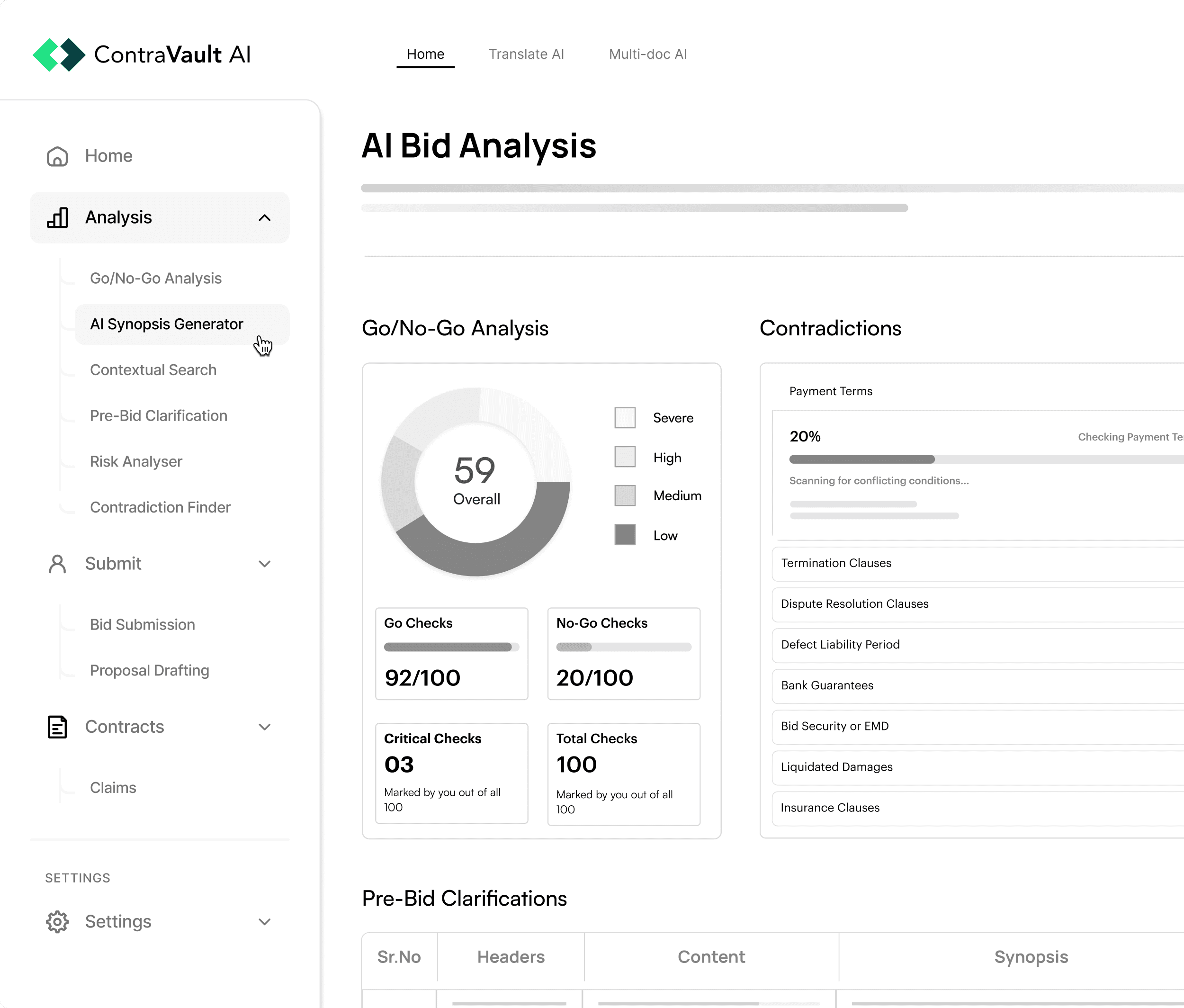
FIDIC tenders typically include hundreds of pages across multiple documents, and the highest risk changes are often spread across Particular Conditions and addenda. ContraVault helps teams convert FIDIC contract requirements into structured, traceable outputs such as a compliance matrix and an obligation map. This allows teams to assign ownership, track deadlines, and reduce the chance of missing a critical clause.
ContraVault also strengthens Bid No Bid decision-making by surfacing high risk clauses early and helping teams quantify contractual exposure before committing weeks of proposal effort. For delivery teams, the same structured outputs support stronger contract administration by keeping notice triggers, approvals, and documentation requirements visible throughout the project lifecycle.
Sources
https://fidic.org/bookshop
https://fidic.org/books/construction-contract-2nd-ed-2017-red-book
https://fidic.org/books/plant-and-design-build-contract-2nd-ed-2017-yellow-book
https://fidic.org/books/epcturnkey-contract-2nd-ed-2017-silver-book
https://fidic.org/sites/default/files/FIDIC_Suite_of_Contracts_0.pdf