FIDIC contracts are globally used standard forms of contract for construction, engineering, and EPC projects. They’re published by the International Federation of Consulting Engineers (FIDIC) and are designed to create a repeatable, internationally understood way to allocate risk, manage change, certify payments, administer claims, and resolve disputes. If you work in tenders, procurement, project controls, contracts, or proposal management, you’ll encounter FIDIC frequently—especially on large infrastructure and lender-funded projects where consistency, auditability, and predictable dispute pathways matter.
What makes a contract “FIDIC” in practice
FIDIC is not just a legal document; it is an operating system for project delivery. It defines:
- Roles and governance (Employer, Contractor, Engineer/Employer’s Representative)
- How instructions become binding (variations, determinations, approvals)
- Time and money entitlements (EOT, cost, delay damages, acceleration)
- Strict notice and record requirements (deadlines, formats, contemporaneous evidence)
- A structured dispute ladder (issue escalation and formal dispute mechanisms)
The most common failure mode on FIDIC projects is not lack of expertise—it’s execution slippage: teams miss notice deadlines, overlook a dependency hidden in Particular Conditions, or fail to trace a requirement to evidence. That’s why strong teams treat FIDIC as a workflow, not a PDF.
The most commonly referenced FIDIC “Books”
FIDIC forms are often referred to by color, representing different delivery models:
Red Book (Construction)
Used when the Employer provides the design and the Contractor builds. It fits traditional construction procurement and is widely adopted in civil/infrastructure works. It tends to rely heavily on measurement, certification, and Engineer-led administration.
Yellow Book (Plant & Design-Build)
Used when the Contractor takes more responsibility for design and performance, typically on plant, MEP-heavy scope, and design-build delivery where output specs matter.
Silver Book (EPC/Turnkey)
Used for EPC/turnkey, where risk allocation is typically more contractor-heavy and price/time certainty is emphasized. Change control, performance guarantees, and tighter entitlement pathways are common expectations here.
A practical tendering insight: the “Book” you’re given tells you what the buyer expects you to absorb. Contractors who price a Red Book mindset under a Silver Book risk posture usually find out too late—during claims, cashflow strain, or dispute.
Key clauses and themes teams should always track
Even without quoting clause numbers, most FIDIC-based disputes cluster around:
- Notice periods and claim admissibility (missing a notice can kill an entitlement)
- Variations and valuation (instruction paths, rate build-ups, approvals)
- Programme obligations and delay (baseline programme, updates, mitigation duties)
- Payment certification mechanics (what must be evidenced to get paid)
- Risk and liability allocation (LDs, caps, indemnities, fitness-for-purpose)
- Dispute avoidance/adjudication processes (keeping disagreements from escalating)
Where ContraVault becomes a multiplier for FIDIC projects
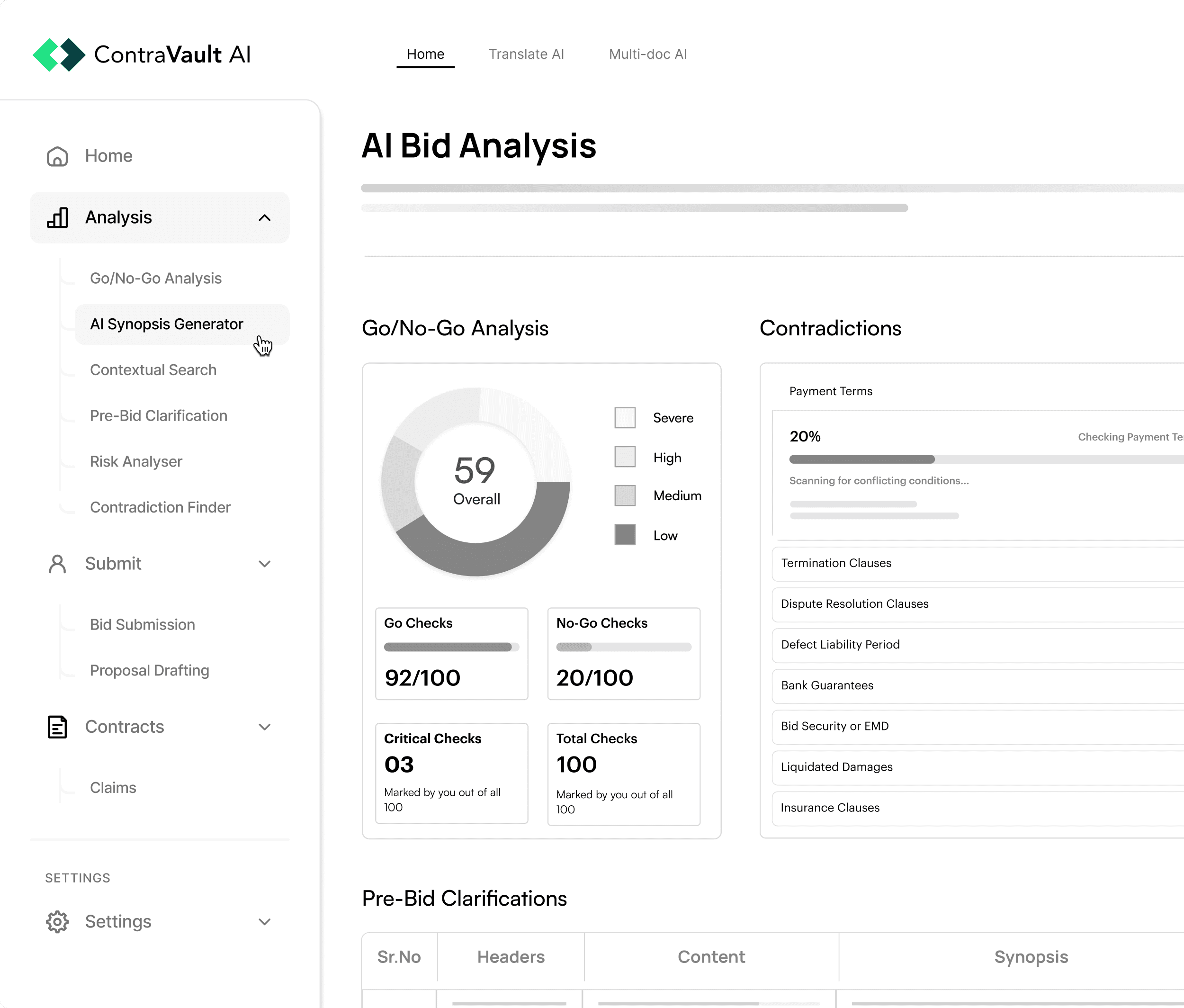
FIDIC contracts are dense because they are designed to be comprehensive, and most projects add Particular Conditions, appendices, and addenda that quietly change the game. ContraVault helps teams handle FIDIC contracts as a structured system by:
- Turning contract and tender text into a traceable compliance matrix with ownership tags
- Flagging high-risk clauses and contradictions across conditions, appendices, and addenda
- Extracting operational obligations like notices, deadlines, submissions, and approvals into structured trackers
- Supporting faster, more defensible Bid/No-Bid decisions by scoring contractual exposure, delivery feasibility, and compliance load before you commit weeks of bid effort
This is how high-performing teams reduce avoidable leakage: fewer missed notices, cleaner variation governance, stronger claims readiness, and better decisions on which FIDIC opportunities are worth pursuing.
Sources
https://fidic.org/books/construction-contract-2nd-ed-2017-red-book
https://fidic.org/books/epcturnkey-contract-2nd-ed-2017-silver-book
https://fidic.org/sites/default/files/FIDIC_Suite_of_Contracts_0.pdf
https://documents1.worldbank.org/curated/en/323361581052752931/pdf/Standard-Bidding-Documents-Procurement-of-Works.pdf
https://fidic.org/bookshop