FIDIC Red Book Meaning
FIDIC Red Book is the most widely used standard form contract for construction works where the Employer provides the design and the Contractor executes the works. It is formally titled the Conditions of Contract for Construction and is commonly adopted for public infrastructure, large civil works, and building and engineering projects that are designed by the Employer’s consultants. The Red Book is popular because it provides a familiar, structured framework for administering payment certifications, variations, time extensions, claims, and dispute resolution in a way that many owners, lenders, and international contractors recognize.
When to Use the FIDIC Red Book
The Red Book is typically the right fit when:
- The Employer is responsible for the design or has already issued detailed drawings and specifications.
- The Contractor’s core obligation is construction and execution, not design development.
- The project needs a strong administration mechanism through an Engineer or Employer’s Representative.
- Interim valuations and certifications are important to manage cashflow and progress tracking.
This form is often referenced in tender documents because it standardizes how bidders interpret contractual responsibilities and how the project will be controlled after award.
How the FIDIC Red Book Works in Real Projects
The Red Book establishes clear roles and processes that shape day to day project behavior:
- The Engineer administers contract procedures, including certifications and determinations.
- Variations are handled through a defined instruction and valuation pathway so scope change is not managed informally.
- Time and cost claims follow a structured process with notice and substantiation expectations.
- Disputes are pushed through a defined escalation route rather than jumping straight to arbitration.
In practice, the Red Book is less about “legal wording” and more about discipline. Teams that treat it like a checklist tend to perform better because they submit notices on time, document events properly, and link variations to approvals and valuations.
Key Things to Review Before You Bid on a Red Book Tender
1) Particular Conditions and Contract Data
Most Employers modify the standard clauses through Particular Conditions and Contract Data. This is where risk often shifts, including tighter claim timelines, higher damages, stricter payment requirements, or additional approvals.
2) Variations and Change Control
Confirm who can issue instructions, what constitutes a valid variation, and how valuation will be done. Many contractors lose margin when change is executed on site but not instructed and valued correctly under the contract mechanism.
3) Time and Claims Requirements
Red Book claims for extension of time and additional payment typically depend on correct notices and evidence. Even when you are entitled in principle, weak process and poor documentation can reduce or delay entitlement in practice.
4) Payment Certification and Cashflow
Understand interim payment rules, certification timelines, retention, and what supporting documentation is required. Cashflow friction is a common Red Book pain point when submissions are not contract compliant.
How ContraVault Helps with FIDIC Red Book Tenders
FIDIC Red Book tenders are rarely one document. They include general conditions, particular conditions, employer requirements, schedules, clarifications, and addenda. The real risk is that obligations and exceptions are scattered across these files, and bid teams miss a deadline, a submission requirement, or a clause that changes risk allocation.
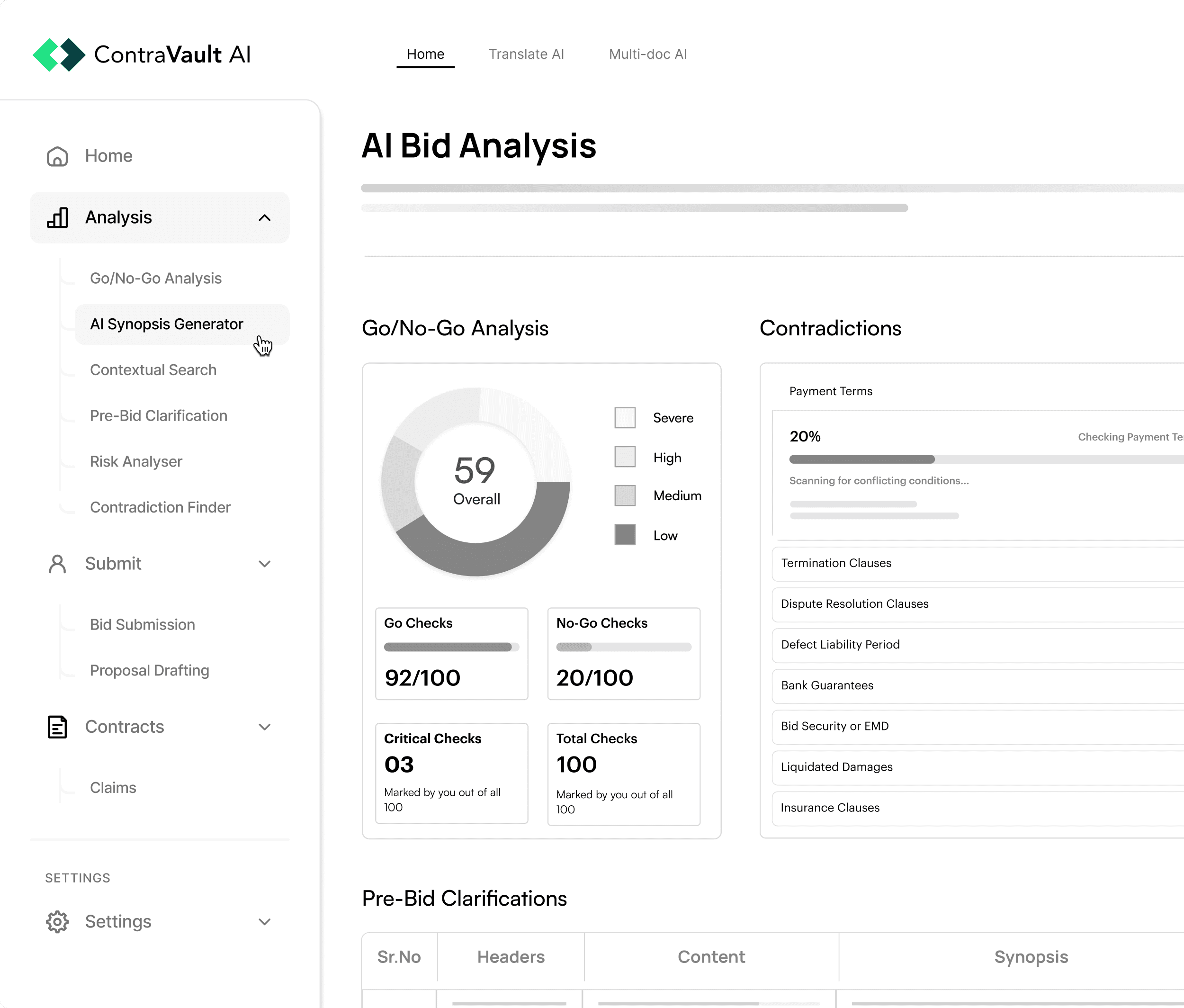
ContraVault helps teams operationalize a FIDIC Red Book tender by turning contract text into structured outputs such as a compliance matrix and obligation map. This enables faster and more defensible Bid or No Bid decisions by surfacing high risk clauses early, and it helps proposal teams stay aligned by assigning owners to requirements and tracking evidence needed for compliance. The result is fewer missed requirements, cleaner internal reviews, and better control over contractual exposure before you commit weeks of effort.
Sources
https://fidic.org/books/construction-contract-2nd-ed-2017-red-book
https://fidic.org/books/construction-contract-2nd-ed-2017-red-book-reprinted-2022-amendments
https://fidic.org/sites/default/files/FIDIC_Suite_of_Contracts_0.pdf
https://fidic.org/node/42052
https://documents1.worldbank.org/curated/en/323361581052752931/pdf/Standard-Bidding-Documents-Procurement-of-Works.pdf