FIDIC Yellow Book 2017 Clause 4.4 Subcontractors
Clause 4.4 in the FIDIC Yellow Book 2017 (Plant and Design Build, Second Edition) sets the rules for when and how the Contractor can subcontract, what approvals are required, and who remains responsible for the subcontracted work. In simple terms, it allows subcontracting, but it prevents the Contractor from “passing the contract away” and it protects the Employer by ensuring the Contractor remains fully accountable for performance, quality, compliance, and coordination.
What Clause 4.4 is trying to control
1) Limits on subcontracting the Works
The Yellow Book allows the parties to set a maximum limit for subcontracting through the Contract Data. If the Contract Data does not state otherwise, the default concept is that subcontracting can extend up to the whole of the Works, but the clause is written to give Employers a mechanism to cap it if they want tighter control on delivery and risk allocation. The practical takeaway is that you must check the Contract Data, because that is where Employers often restrict subcontracting by value, trade, or scope package.
2) Consent and “no objection” mechanism for proposed subcontractors
Clause 4.4 includes a structured process where the Contractor submits details of a proposed subcontractor and the Engineer responds within a defined period. If the Engineer does not object within that time window, consent is treated as granted by default. In day to day tender and delivery terms, this is important because it creates a clear record trail for approvals and prevents delays caused by silent inboxes.
3) Contractor responsibility remains intact
Even when subcontracting is permitted, the Yellow Book approach is that the Contractor remains responsible for the subcontracted work as if it were performed by the Contractor. That means subcontracting does not dilute accountability for defects, delays, coordination failures, non compliance, safety, or quality. This is one of the most misunderstood points during bid pricing, because teams sometimes assume risk shifts to the subcontractor contractually, but under the main contract it generally does not.
4) Special attention to “key” or high value subcontractors
On many Yellow Book projects, Employers include additional controls for critical packages like design, MEP systems, specialist plant, commissioning, and interface heavy scopes. The clause supports a permission based model where subcontracting above a certain threshold or for specific parts of the Works can be restricted unless approvals are obtained. In practice, this is where bidding teams need to map which scope packages are likely to be considered high risk and align the subcontract plan accordingly.
Practical implications for bidders and contract managers
Bid stage
- Build a subcontracting plan that matches Contract Data limits and approval requirements
- Identify packages that could be restricted and price the approval lead time risk
- Ensure your programme assumptions include the consent timeline and documentation effort
- Check Particular Conditions carefully, because Employers often tighten this clause
Delivery stage
- Maintain a clean approval trail for subcontractors and their scope boundaries
- Ensure subcontractor actions, notices, and records are aligned with the main contract obligations
- Track thresholds for restricted subcontracting so you do not breach the contract unintentionally
How ContraVault helps teams handle Clause 4.4 properly
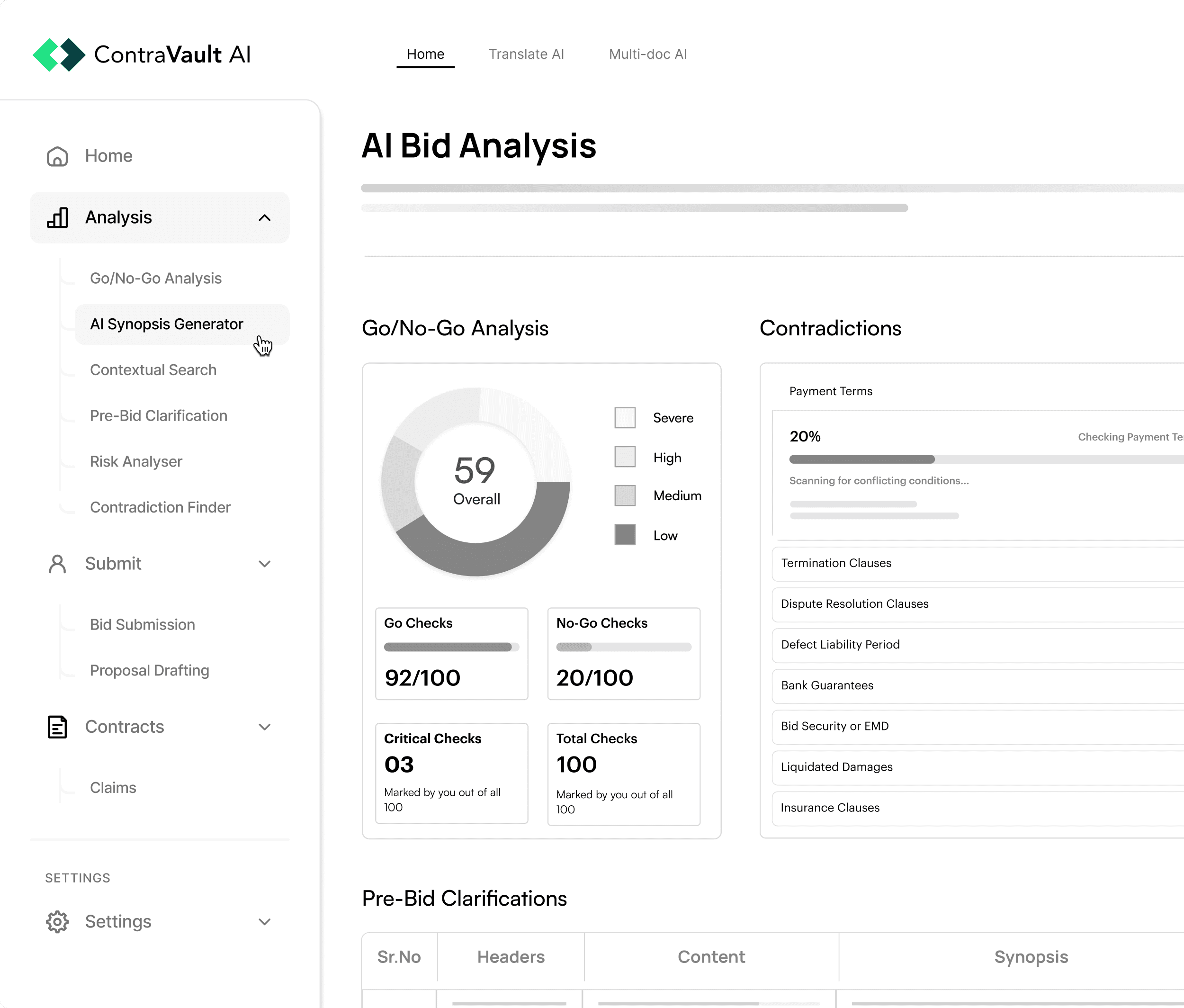
Clause 4.4 becomes risky when it is buried inside hundreds of pages along with Contract Data, Particular Conditions, and addenda. ContraVault helps teams by extracting subcontractor approval requirements into a structured obligation map, flagging where Contract Data modifies the default position, and highlighting consent timelines so project teams do not miss a procedural step. It also strengthens Bid No Bid decisions by surfacing subcontracting restrictions early, especially when a project relies heavily on specialist subcontract packages and interface risk.
Sources
https://fidic.org/sites/default/files/press%20release_rainbow%20suite_2018_03.pdf
https://fidic.org/sites/default/files/bean_files/2017%20FIDIC%20Yellow%20-%20seperated%20errata.pdf
https://www.jdsupra.com/legalnews/subcontracting-without-consent-when-44469/
https://www.emerald.com/books/book/16942/chapter/93926576/The-Contractor
https://fidic.org/books/plant-and-design-build-contract-2nd-ed-2017-yellow-book