
Mastering Strategic RFP Clarifications for Private Sector Construction Bids
The complete guide for US AEC professionals seeking practical frameworks and proven strategies to master strategic RFP clarifications in private sector bids. Learn how to improve project outcomes, reduce risk, and streamline your proposal strategy with actionable guidance.
Beyond Compliance: Mastering Strategic RFP Clarifications for Private Sector Construction Bids — Complete Guide for US AEC Professionals
Navigating the High-Stakes World of Private Sector Construction Bids
With the US federal construction market reaching $773 billion in contracts during FY2024 and procurement activities jumping by 6.5% in early 2025, the imperative for AEC firms to master strategic RFP clarifications has never been greater. In this environment, proposal managers and business development leaders face mounting complexity, tighter deadlines, and razor-thin margins. According to market research on US construction projects, bid ambiguity and reactive RFI processes contribute to an estimated 30% of all project change orders and eroded profitability—making strategic pre-bid clarifications a mission-critical skill.
This guide gives US-based architecture, engineering, and construction firms the proven blueprint for transforming the RFI process from compliance-focused paperwork to a dynamic business development asset.
---
What You'll Master:
- How to construction RFI strategies that reveal client priorities, expose hidden risks, and improve win rates
- Implementation of intelligent, data-driven frameworks for pre-bid clarifications tailored to AEC RFP process norms
- Deploying proposal strategies that transform RFP ambiguity into a strategic advantage for private sector RFPs
- Problem-solving frameworks for margin protection, risk mitigation, and long-term business development success
---
Beyond Compliance: Turning Ambiguity into Advantage in the AEC RFP Process
Private sector RFPs are more complex than ever. As construction procurement activities increased 6.5% in Q1 2025 alone, AEC firms face growing risks from vague requirements, contradictory specifications, and non-standard contract terms that often diverge from AIA and EJCDC guidelines. Industry analysis of construction project data shows that most proposal managers still treat RFI periods as a compliance chore—missing out on a decisive competitive edge.
The Problem: Costly RFI Weaknesses
- Compliance Over Strategy: The majority of firms send RFIs focused only on procedural clarifications—deadlines, submission formatting, contact points—rarely probing deep enough to mitigate real risks or uncover client priorities.
- Manual Review Bottlenecks: Proposal teams spend countless, error-prone hours manually cross-referencing RFPs, scopes of work, and contractual language without effective digital or AI support.
- Scope Creep & Lost Profit: Ambiguity left unaddressed during the bid phase routinely leads to hundreds of post-award RFIs, schedule disruptions, and change orders that eat into profit margins.
Key Statistic: Market research on US construction projects reveals that the average private sector project generates 150+ RFIs post-award, with over $280,000 in change order cost attributed to missed bid-phase clarifications.
Challenge for AEC Professionals: Moving beyond the "checklist" compliance mindset to proactively shape project outcomes—starting with the RFP clarifications.
---
The Strategic RFI Framework: Turning Questions into Competitive Advantage
A strategic approach to pre-bid clarifications is not just about getting answers—it's about gathering intelligence to guide your proposal strategy, reduce risk, and create value for both client and firm.

Step 1: AI-Powered RFP Analysis and Risk Triage
Industry Practice: Only 15% of US AEC firms use AI tools to analyze RFPs—yet these firms gain faster, more accurate risk detection and uncover hidden contractual ambiguities.
- Automate Key Requirement Extraction: Leverage AI and digital platforms to instantly highlight ambiguous scope, non-standard clauses, and high-risk scheduling conflicts.
- Risk Flagging: Identify where contract language deviates from AIA A201 or EJCDC C-700 standards, revealing issues like undefined performance metrics or conflicting schedule specifications.
Step 2: The Multi-Disciplinary "RFI War Room"
Best Practice (per construction industry experts):
- Assemble cross-functional teams from BD, Pre-Construction, Legal, and Operations.
- Brainstorm questions that address not just technical feasibility, but contractual liabilities and potential negotiation points.
- Avoid solely administrative questions; focus on insights that enhance your proposal strategy.
Step 3: Four Categories of Strategic RFI Questions
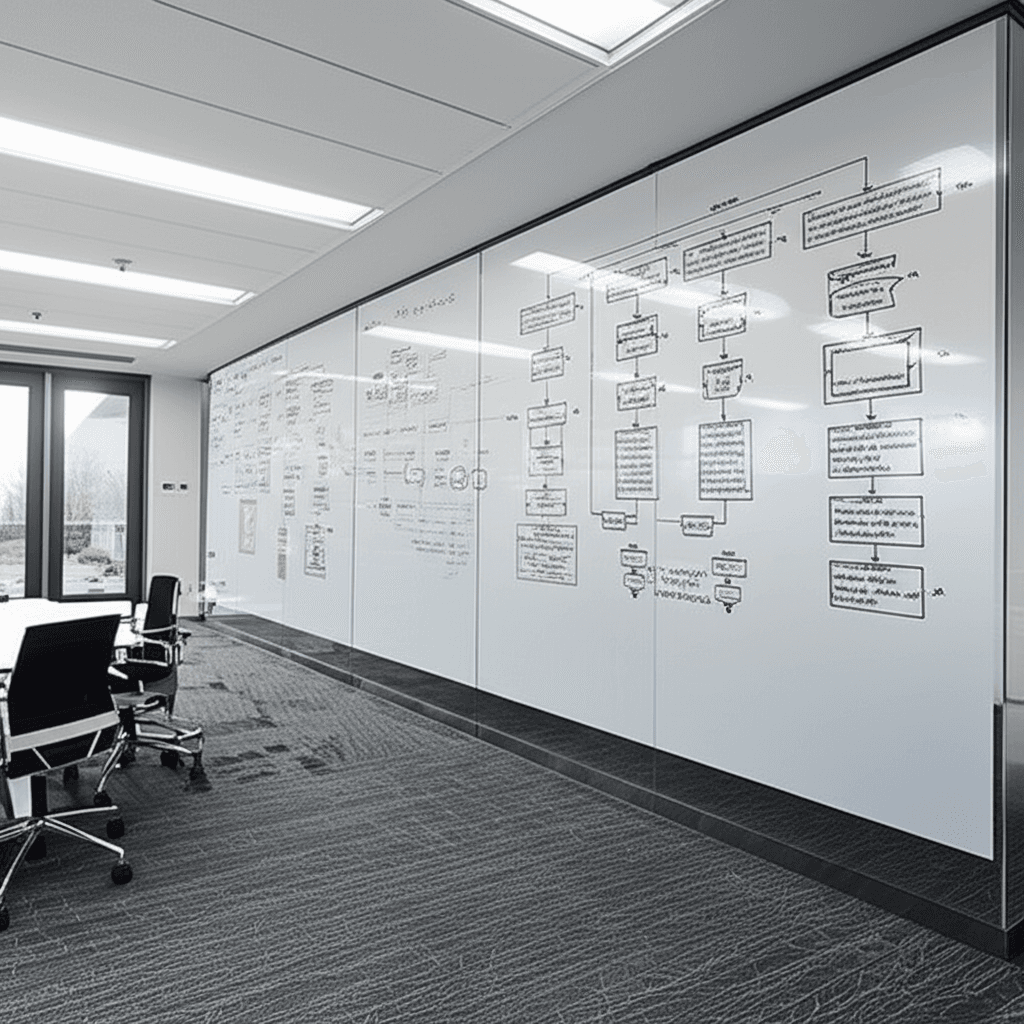
- Discovery Questions:
- Goal: Reveal client’s unstated goals and business drivers.
- Example: "Beyond LEED Silver certification, what critical sustainability benchmarks must this facility achieve for tenant retention?"
- Risk Mitigation Questions:
- Goal: Pinpoint accountability and foresee landmines.
- Example: "Section 6.2 refers to local permitting, while Schedule Appendix D assumes a six-week start—does the timeline account for city review delays?"
- Value Proposition Questions:
- Goal: Highlight your firm’s specific expertise and innovative solutions.
- Example: "Has the owner considered alternate geothermal systems? On our last institutional build, we delivered 20% energy savings via closed-loop designs."
- Competitive Positioning Questions:
- Goal: Shape evaluation criteria and align with your firm’s strengths.
- Example: "Does the scoring rubric give extra weight to experience in complex, multi-phase renovations undertaken in operational healthcare environments?"
Tip: AEC procurement research demonstrates that asking client-focused, outcome-direct questions in these four categories directly correlates with higher bid win rates and reduced post-award risk.
Step 4: Centralizing RFI Knowledge for Long-Term Strategic Value
- Use cloud-based collaboration tools to track all submitted questions and client responses, building a reference library.
- Systematize RFI data storage to enable historical analysis, informing future proposal strategies and reducing repetitive risk.
---
Advanced Implementation: Customizing the Strategic RFI Blueprint per Project Model
Successful AEC firms tailor their RFI strategies to the specific project delivery approach—whether Design-Build, IPD, or CM-at-Risk. Government construction research on project delivery shows that alignment between RFI content and contractual context is a key factor in avoiding misinterpretations and project disputes.

Design-Build Projects
- Focus RFIs on clarifying performance-based specifications, owner’s role in design, and pathways for change order approvals.
- Example Questions: "For the GMP, what contingency assumptions have owners made given potential scope evolution during design?"
Integrated Project Delivery (IPD)
- Use RFIs to gauge owner and partner commitment to collaborative principles and equitable risk/reward allocation.
- Example Questions: "How will early discovery of unforeseen site conditions impact shared savings and accountability within the IPD agreement?"
CM-at-Risk (CMAR)
- Center questions on pre-construction scope, GMP definitions, and contingency allocation.
- Example: "Does the owner intend to tender trade packages pre-GMP, or will contingency exclusively cover cost overruns from late design changes?"
Building Your Proprietary Intelligence Library
- Categorize RFI responses by client and project type.
- Identify recurring negotiation points, common delay sources, and competitor strategies.
- Refine your own risk model and Go/No-Go bid criteria based on historical data.
Informing Go/No-Go Decisions
- Use accumulated RFI intelligence to create a “risk dashboard” of clients and projects.
- Reference lagging indicators such as number of post-award RFIs, change order volume, and realized margins to adjust future proposal strategies.
---
Your 90-Day Strategic RFI Transformation Plan: Step-by-Step Implementation
To operationalize the strategic RFI blueprint, AEC proposal teams must work systematically—auditing current practices, training, implementing, and optimizing.

Days 1-30: Audit and Foundation
- Review your last 10 submitted proposals and classify the types of RFIs you submitted.
- Identify which clarifications (or lack thereof) led to post-award change orders.
- Evaluate your manual RFP review against available AI-powered tools.
Days 31-60: Implement and Train
- Adopt the four-category RFI framework firm-wide.
- Pilot your first cross-functional RFI “War Room” session for an upcoming bid.
- Begin cataloging all RFI questions and client responses in a central digital library.
Days 61-90: Measure and Optimize
- Track reduction in proposal prep time (target 20-30%), increase of strategic questions asked per RFP.
- Quantify improvement in win rates (target 10-20%), and reduction in post-award RFIs/change orders.
- Solicit feedback from your teams to iterate and refine strategies.
KPI Targets and Measurement Framework
- Lead Indicators: Fewer hours spent on manual RFP review; higher volume and quality of strategic RFIs.
- Lag Indicators: Increased proposal win percentage; fewer post-award disputes/change orders; enhanced as-bid profit margins.
- Professional Benchmark: Firms that systematically use intelligent RFI strategies achieve on average 1.5x win rate improvement (industry analysis of construction project data).
---
Conclusion: Mastering Strategic RFP Clarifications to Transform Your Firm’s Bid Success
The ability to leverage RFP clarifications goes far beyond compliance—it is the foundation of strategic AEC business development in today’s US construction market. By deploying the frameworks and practical tactics detailed in this guide, proposal managers and business development leaders position their firms to win the bid before submission, mitigate risks before project startup, and build lasting client partnerships anchored in expertise and trust.
Key Takeaways:
- Strategic RFI frameworks turn ambiguity into a chance to influence project outcomes and optimize margins.
- Intelligent, multi-disciplinary RFI processes build a lasting knowledge base and enhance long-term proposal strategies.
- Measuring the right KPIs ensures continual improvement and business development ROI.
Action Steps:
- Immediately audit your current RFI and proposal processes for strategic gaps.
- Assemble cross-functional teams and deploy the four-category strategic RFI framework on your next bid.
- Build and maintain your proprietary RFI intelligence database to inform go/no-go decisions and future proposal strategies.
In the increasingly complex, high-stakes US construction sector, proactive mastery of the strategic RFP clarification process is the difference between incremental challenges—and transformational business development success.
Sign Up for more like this
By submitting this form, you agree to our Privacy Policy and consent to receiving updates from ContraVault.
Ready to take your bidding to the next level?
Discover how AI can streamline RFP document analysis, uncover non-standard clauses & boost success rates.