RFQ vs RFP in USA Construction: Key Differences Explained
A simple, U.S. federal-focused guide to RFQ vs Construction RFP what each means, when agencies use them, how awards work, and how AI RFP Analysis helps contractors bid smarter.
RFQ vs RFP in Federal Construction: Understanding the Difference
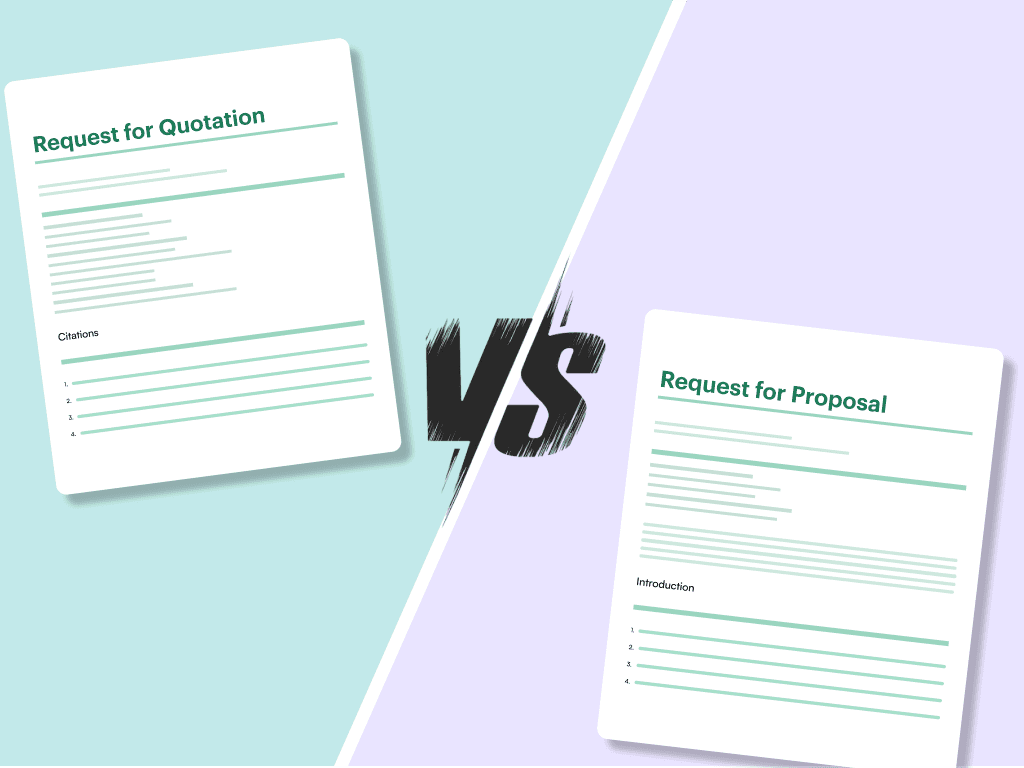
When navigating U.S. federal infrastructure and construction contracts, you’ll often encounter the terms RFQ and RFP. These acronyms stand for Request for Quotation and Request for Proposal, respectively.
While they sound similar, they serve different purposes in the federal procurement process. Understanding whether to pursue an RFQ vs RFP and how to handle each is critical for success in federal construction contracting. Here are the key takeaways:
- RFQ = Request for Quotation a simplified solicitation, mainly used to get prices for a well-defined need. It’s quicker and focuses on finding the best price for something the government already specified in detail.
- RFP = Request for Proposal a detailed solicitation for complex projects where the approach matters. It requires a comprehensive proposal and the award is based on the best overall solution (technical quality, experience, and price combined).
- AI tools are increasingly used to streamline RFP analysis, helping to parse massive RFP documents, identify key requirements, and even assist in drafting responses, thereby saving time in the proposal process.
By recognizing these differences, businesses can tailor their bidding strategy appropriately whether that means quickly turning around a quote for an RFQ or investing in a high-quality proposal for an RFP. Likewise, agency personnel can choose the right solicitation method (RFQ or RFP) to get the outcome they need, efficiently and fairly.
What is an RFP (Request for Proposal)?
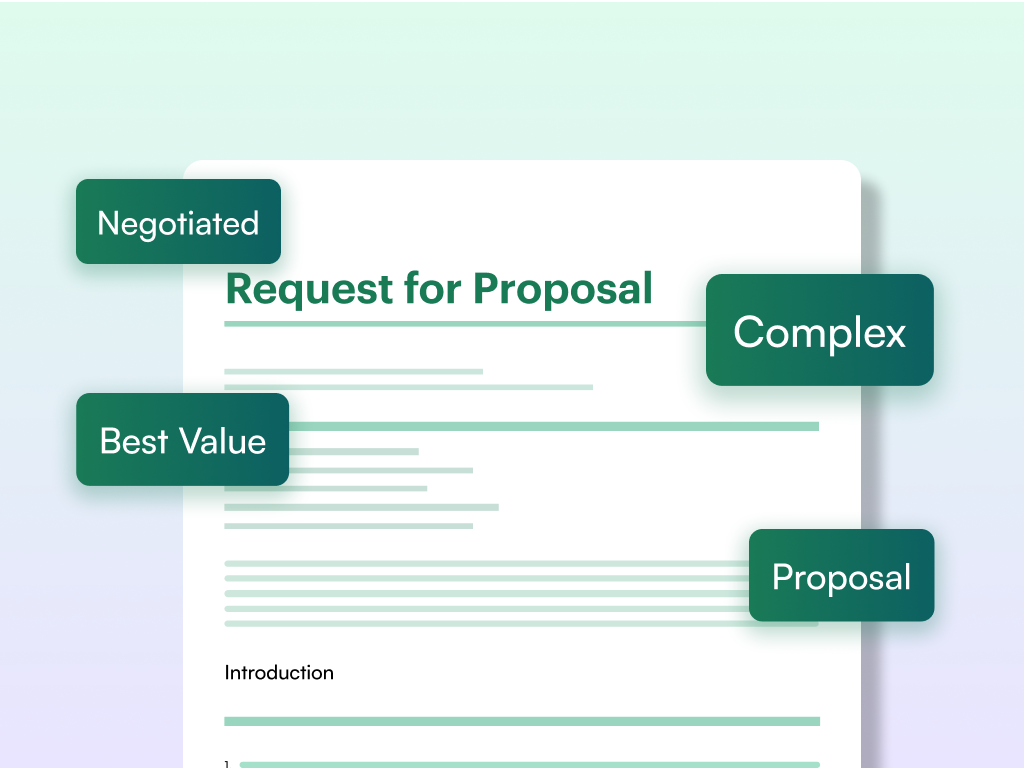
An RFP is a solicitation used when the government seeks formal proposals from contractors for a project or solution. Unlike an RFQ, an RFP asks vendors not just for pricing, but for a comprehensive proposal detailing how they will perform the work, their technical approach, management plan, past experience, and so on. The Federal Acquisition Regulation (FAR) notes that “Requests for Proposals (RFPs) are used in negotiated acquisitions to communicate Government requirements to prospective contractors and to solicit proposals.” In essence, an RFP is used when the government wants to evaluate offers on factors beyond just cost.
Key features of an RFP include:
- Complex or undefined solutions: RFPs are common for complex projects or services. If an agency is embarking on a major construction project (like building a new federal courthouse or highway interchange), they will issue an RFP asking for detailed proposals. The agency outlines its requirements and objectives, but offerors have room to propose creative methods or technical solutions to meet those needs.
- Detailed proposal responses: Contractors must prepare a thorough proposal document in response. This usually includes a technical proposal explaining how they will accomplish the work (construction plan, design approach, schedule, staffing, etc.), a management or past performance section, and a pricing proposal. The response is much more involved than an RFQ quote.
- Multiple evaluation criteria: Best value is typically the goal. The government will evaluate proposals based on several factors: not only price, but also technical quality, qualifications, past performance, schedule, and other criteria specified in the RFP. For example, in a construction RFP, the agency might weigh the contractor’s technical plan and experience heavier than price, to ensure a capable firm is selected. This contrasts with an RFQ or a sealed bid where price is the primary determinant.
- Negotiation and discussion: RFPs fall under negotiated procurement (FAR Part 15). This means after receiving proposals, the government can enter discussions or ask for clarifications and revised proposals. There may even be a chance for a “best and final offer.” The process is more interactive and flexible than an RFQ. (In fact, RFP responses are considered formal offers. If the government accepts an RFP proposal, it can directly form a binding contract - whereas, as noted earlier, an RFQ quote alone cannot form a contract without a government purchase order.)
- Longer timelines and formalities: Because of their complexity, RFPs usually allow more time for contractors to respond (often 30 days or more). They also typically follow stricter formats (including sections like a Statement of Work, evaluation criteria, and references to relevant sections of the FAR or agency regulations). Major RFPs are publicized widely to ensure competition.
Public Posting: Federal RFPs are required to be posted publicly (except for certain exemptions). Today, most solicitations including RFPs are posted on SAM.gov, the central federal procurement site. For example, GSA notes that complete RFP solicitations for big contract programs are posted on SAM.gov for vendors to review. This allows any qualified business to download the RFP documents and submit a proposal. In contrast, some RFQs (especially those under simplified procedures or on specific contract vehicles) might be sent only to a few vendors or posted in targeted portals (like GSA eBuy for schedule contract holders).
Example: If the Department of Transportation wants to contract out the construction of a new bridge, it will issue an RFP on SAM.gov. Interested construction firms will download the RFP package, which might include detailed specifications, design criteria, environmental requirements, etc. They will then prepare a proposal explaining their construction plan, team experience building similar bridges, timeline, and a price. The agency will evaluate all proposals to determine which offers the best value, considering technical merit and price. The selected proposal (once accepted by the government) becomes the basis of the contract. (You can think of an RFP as the government saying, “Here’s our problem or project send us your plan and price to solve it,” as opposed to an RFQ which says, “Here’s exactly what we need how much will you charge?”)
What is an RFQ (Request for Quotation)?
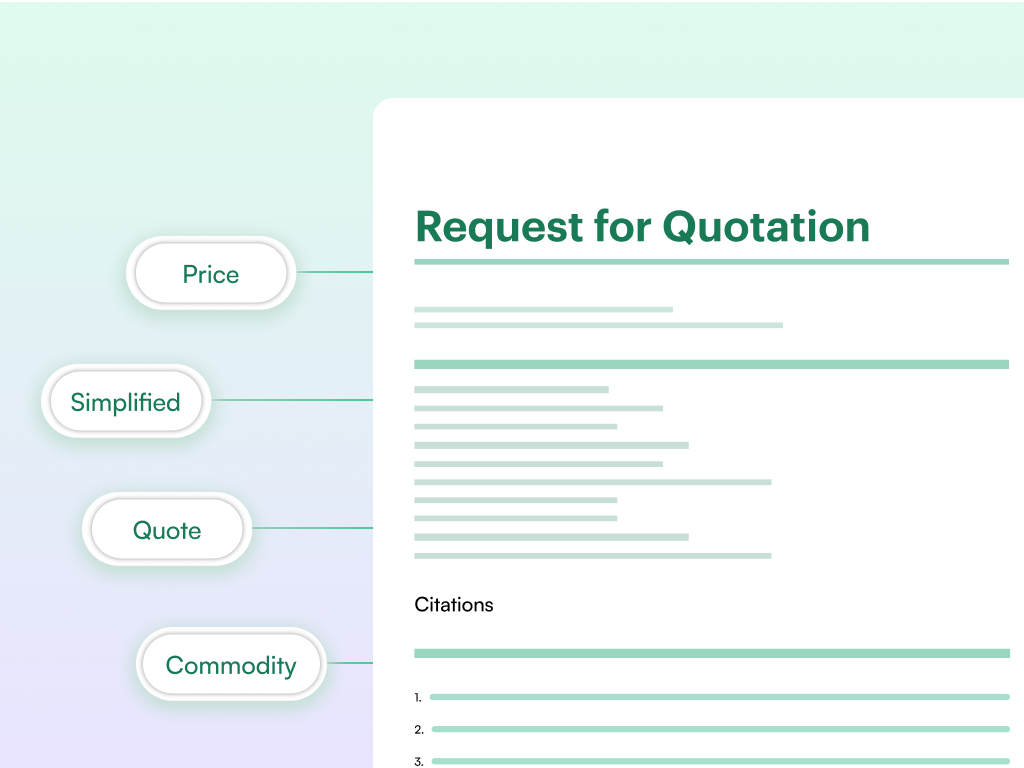
An RFQ is a type of solicitation used by government agencies to obtain quotes (typically prices) for specific products or services. In federal contracting, an RFQ is usually a simplified, informal request issued when the agency knows exactly what it needs and is primarily looking for price quotations. According to one government procurement glossary, an RFQ is essentially “a solicitation document used in simplified acquisitions to communicate … requirements to prospective contractors”.
How AI Tools Help with RFP Analysis
Responding to federal construction RFPs can be daunting these documents can span hundreds of pages of technical specs, regulations, and requirements. This is where modern AI analysis tools come into play. AI can dramatically streamline the process of reviewing and analyzing RFPs, helping both government and contractors. Here are a few ways AI-powered analysis of RFPs is making an impact:
- Quickly digesting large documents: Traditionally, a proposal team might spend days reading through a lengthy RFP line by line to extract all the requirements, deadlines, and compliance criteria. AI natural language processing can do an initial pass in minutes. For example, AI algorithms can scan an RFP and automatically highlight key sections scope of work, proposal instructions, evaluation factors, contract clauses, etc. so that humans don’t miss anything important. This accelerates the RFP analysis process tremendously. As one construction tech guide noted, “RFP analysis traditionally requires hours of careful reading… AI can quickly scan these documents and highlight critical requirements, deadlines, and scope details, allowing you to focus on the strategic aspects of your bid rather than getting bogged down in document review.”
- Organizing requirements and compliance checks: In federal RFPs, contractors must respond to each requirement and ensure their proposal complies with every instruction (or risk being disqualified for omission). AI tools can automatically generate a compliance matrix by parsing the RFP essentially a checklist of every must-do item (e.g. “Submit safety plan (Section 3.5)”, “Include past project descriptions for at least 3 projects”, “Complete pricing table Attachment J.2”, etc.). This helps proposal managers ensure nothing is overlooked. AI can also categorize requirements by topic, so subject matter experts can be assigned to the right sections quickly.
- Extracting data for estimates: In construction RFPs, there are often technical drawings, specifications, and data tables. Advanced AI can even do things like quantity takeoffs from drawings or spec sheets identifying how many square feet of roofing or how much concrete is called for to inform cost estimates. Some AI tools integrate with cost databases to suggest pricing or flag if something in the RFP is unusual compared to past projects.
- Learning from past proposals: AI systems trained on past RFPs and proposals can provide insights for new ones. For example, they might help identify which parts of a proposal are likely to be most important to evaluators, or even recommend boilerplate text from a library of past successful proposals (adjusted for context). This speeds up writing drafts. (However, writers must be careful AI text suggestions should be reviewed for accuracy and tailored to the specific RFP.)
- Bid/no-bid decision support: Quickly understanding an RFP’s requirements via AI can help a company decide whether to pursue the opportunity. If the AI highlights that the project requires certain certifications or experience the company lacks, the team can make an informed no-bid decision early, saving effort.
FAQ
Q: What does RFP stand for, in simple terms?
A: RFP means Request for Proposal. The government is saying: “Here’s the project - tell us your plan, your team, your timeline, and your price.” It’s used for bigger, more complex jobs.
Q: What does RFQ stand for, and how is it different?
A: RFQ means Request for Quotation. The government is saying: “We know what we need - just tell us your price.” It’s usually for simpler or smaller work.
Q: When should an agency use RFQ vs RFP?
A: Use RFQ when the job is clear and price is the main deciding factor. Use RFP when the job is complex and the agency needs to compare approaches, experience, and plans - not just cost.
Q: Are federal construction contracts always lowest-bid wins?
A: No. Some are lowest-bid (like IFBs), but many big projects use RFPs and pick the best value - price plus quality, experience, and risk.
Q: Where can I find federal RFPs and RFQs?
A: On SAM.gov, the main U.S. federal contracting website. It lists active RFPs, RFQs, and other opportunities.
Q: How can AI help with an RFP?
A: AI can scan long RFPs fast, pull out key requirements, flag risks, and build compliance checklists - saving hours of manual RFP analysis.
Sign Up for more like this
By submitting this form, you agree to our Privacy Policy and consent to receiving updates from ContraVault.
Ready to take your bidding to the next level?
Discover how AI can streamline RFP document analysis, uncover non-standard clauses & boost success rates.